Our pick
Show and hot pot
Ochi Izumibeya, Rinku Town
- LengthRuns 1.5 to 4 hours
- Pricefrom $65
- CancellationFree until the day before
Guides
Language
Currency
Check open spotsstarting at $62 · free cancellationEstimate your group cost
Compare 4 alternatives
Choose how many guests are coming and compare the starting prices.
≈
View≈
View≈
View≈
ViewFrom-prices on GetYourGuide, shown at the ECB reference rate. Your exact price is confirmed during booking.
A sumo dinner in Osaka usually means chanko nabe, the hot pot of the wrestlers, eaten at a show restaurant. This guide explains the dish, shows where the dinner show sits on the map and compares it with a bento at the hall, a breakfast show and cooking it yourself.
Editorial team, osakasumo.top · Updated November 6, 2026 · Quick read: 6 min
Basics
The Ministry of Foreign Affairs of Japan says the meals in a sumo stable are called chanko, that everyone in the stable gathers for chanko twice a day, and that chanko nabe is the most commonly cooked dish.2 It describes the dish as a Japanese hot pot with a stock seasoned with salt, soy sauce, miso and other condiments, where each stable has its own recipe and the ingredients are usually meat, fish and seasonal vegetables.1
GO TOKYO calls it sumo stew, a hotpot of chicken, pork, fish, sometimes beef, and vegetables, and says it is very famous.3 JNTO describes a concoction of vegetables, meat and seafood cooked in a large pot and eaten in vast quantities by the wrestlers.4 Together the three descriptions agree on the shape: a big shared pot, a lot of protein and vegetables, and a stock that varies from kitchen to kitchen.
The Ministry places the origin of the dish in Tokyo's Ryogoku and says it became popular around the end of the Meiji era as a cheap and effective way to build wrestlers' strength.5 Seen from Osaka, the dinner is a borrowed tradition. The city's own tournament is in March, but the pot belongs to the stables of the sport as a whole, and Osaka restaurants stage it for visitors.
The options side by side
| Option | Where | What you eat | Notes |
|---|---|---|---|
| Hot-pot show | Rinku Town, by the airport. | Chanko nabe in a shared pot. | Lunch at 1:00 PM or evening at 6:00 PM. |
| Wagyu sukiyaki show | The same restaurant. | Japanese Black Wagyu sukiyaki. | Front-row seating; halal available. |
| Hall show | Namba Parks, 8th floor. | A bento or snack. | Vegan and halal options.9 |
| Breakfast show | Near JR Imamiya Station. | A sumo-style breakfast. | Starts at 8:30 AM. |
| Daito experience | Active Square Daito.10 | You make chanko nabe yourself.10 | Under two hours, with amateur wrestlers.10 |
Listing details come from each listing's record; the bureau page gives the Daito details.
The Ministry explains a small superstition that shows how deep the ritual goes. Traditionally the stock was only chicken, because four-legged animals were believed to be unlucky; beef and pork stock are used today, but some stables still choose chicken on the day before a big tournament.7 The link is the ring itself: a wrestler whose hands touch the floor loses the bout, and that posture is thought to resemble a four-legged animal.
That detail helps you read a menu. A listing that says chanko nabe without naming the meat could be built on any of those stocks, and the sources do not say which one a given restaurant uses. Ask when you book if the stock matters to you, for instance for religious or dietary reasons.
The same Ministry page notes that you can choose the flavor and put in whatever you like, so even the fussiest eater can eat as heartily as a sumo wrestler.8 In a restaurant the choices are narrower, but the principle holds: the pot is shared, the portions are generous, and the ritual is as much about eating together as about the food.
The price ladder
Starting prices as listed; the date and group size you choose set the price you pay.
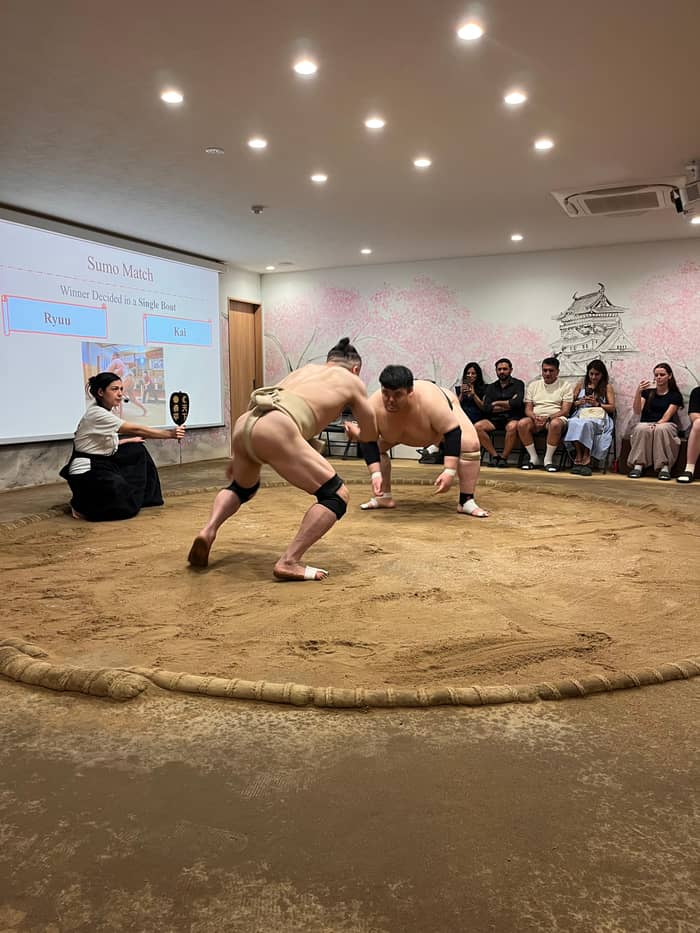
The sumo dinner show in Osaka that most visitors find is staged at Sumo Restaurant Ochi Izumibeya, inside Ochiarena on the 2nd floor of Rinku Pleasure Town Seacle. The GetYourGuide listing for the show with a hot-pot meal runs 1.5 to 4 hours, with shows at 1:00 PM for lunch and 6:00 PM in the evening, and doors opening 12:00 to 12:45 PM and 5:00 to 5:45 PM.
Chanko nabe is served in a large shared pot for each table, and guests serve themselves into bowls. The listing adds a kimono or haori experience at the door-opening time, one-on-one ring matches that may be chosen by random selection if more guests join than the ring takes, and a reminder that the show is a cultural entertainment program and not a Grand Sumo tournament. It is from $65, small groups are available, and 1,502 reviews give it 4.54.
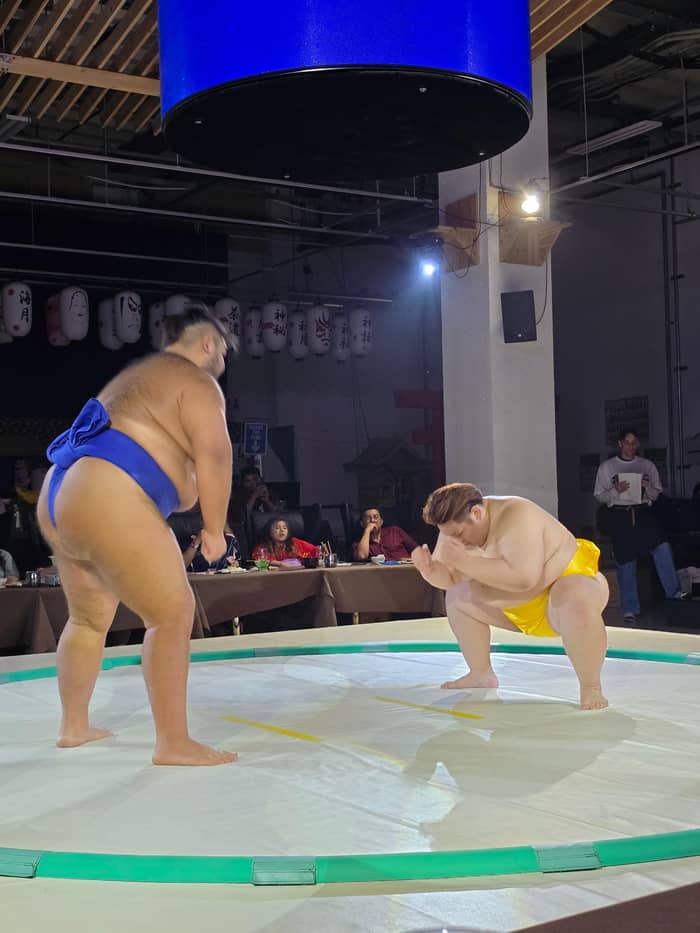
A dinner-show page on this subject would be incomplete without the other tier. A second listing from the same restaurant offers guaranteed front-row seating and a Japanese Black Wagyu sukiyaki, with halal Wagyu sukiyaki available and an optional drink pairing, 2.5 hours, from $127. A third adds a private van transfer for up to 6 participants, 3 hours, from $238. The choice is between sharing a pot at the base price and paying more for a seat or a ride.
Your dinner
Match your evening to the meal.
If I want the real chanko pot
Book the hot-pot show
The listing serves chanko nabe in a shared pot for each table.
If I want to stay in Namba
Pick the hall show with a bento
The show is on the 8th floor of Namba Parks.
If I need halal food
Ask about the sukiyaki or bento
Halal Wagyu sukiyaki is offered, and the hall bento has halal options.9
If I fly out the next day
Choose Rinku Town
The airport's own rail station is 1 stop and 5 minutes away.
If I want to cook it myself
Try the Daito experience
Everyone makes and eats chanko nabe after the instruction.10
Book a meal show
Our pick
Ochi Izumibeya, Rinku Town
Premium
Front-row seating
In town
Namba Parks, 8th floor
The venue is not in the center of the city. The listing for a 3.5-hour evening show, which has no reviews yet, says Rinku Town is about 45 to 90 minutes from central Osaka and advises allowing enough time for the trip. The hot-pot listing gives the last stretch: leave Rinku Town Station by Exit 4, walk straight, and after about 3 minutes a large building called Ochiarena stands on the right.
By the same listing, the airport's own rail station lies 1 stop and 5 minutes away. That makes the dinner a natural last evening for a traveler flying out the next day, and a harder fit for someone based in Namba who wants to be back early.
The private-van listing covers that gap with a one-way or round-trip transfer for a small group. If you want a sumo restaurant in Osaka itself, without the trip, the options below stay in the city.
An evening at the restaurant
5:00 to 5:45 PM
The listing gives these door times for the evening show.
Before the show
Guests may try a kimono or haori or dine before the show.
6:00 PM
The evening show starts at 6:00 PM.
During the show
Chanko nabe is served in a large pot for each table, and guests serve themselves.
After the show
One-on-one ring matches may be chosen by random selection.
The end
Adding rice or noodles to the soup ends the pot.6
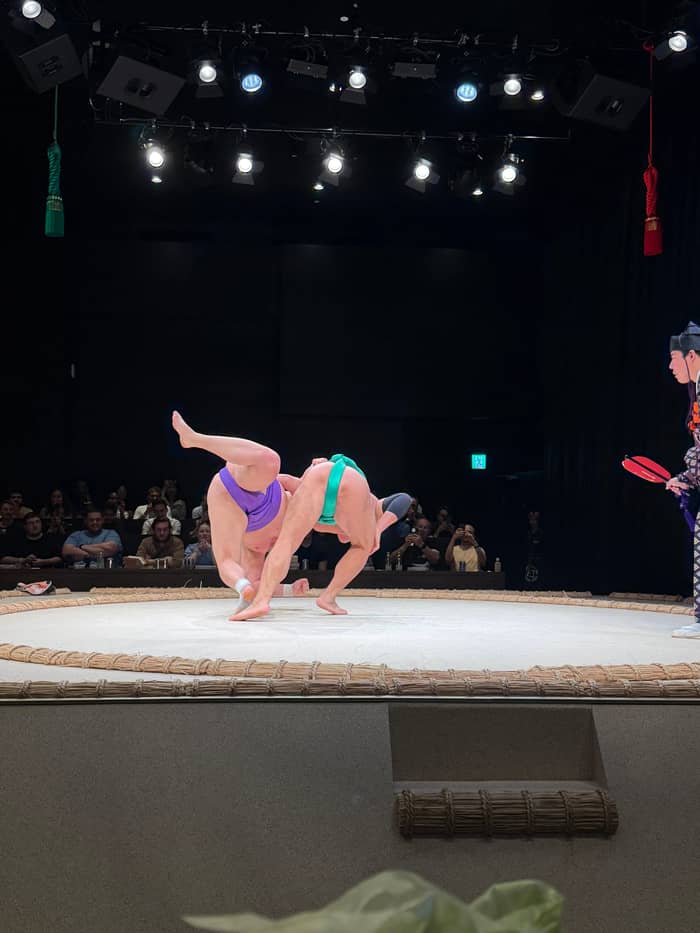
At Sumo Hall Hirakuza on the 8th floor of Namba Parks, the 2-hour show comes with a bento or snack, from $92 and non-refundable. The Osaka Convention & Tourism Bureau says guests can enjoy the Hirakuza show with bento boxes, with vegan and halal options, and alcoholic beverages.9
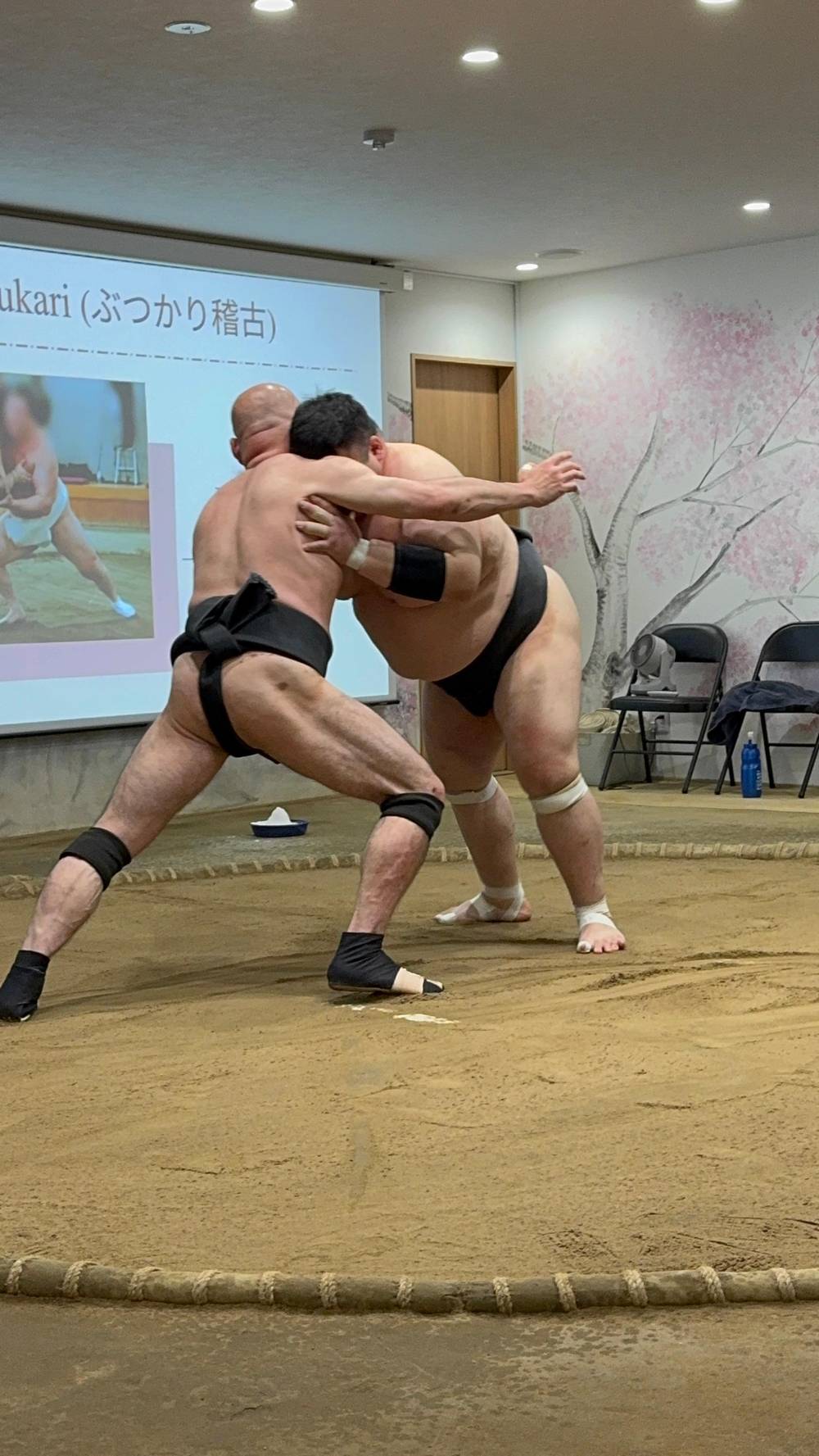
The breakfast show at Osaka Sumo Kaminari Ichimon begins at 8:30 AM, a 3-minute walk from JR Imamiya Station, and includes a sumo-style breakfast, from $45. Active Square Daito offers an experience where everyone makes and eats chanko nabe after amateur wrestlers instruct you, all in under two hours.10
For an ordinary dinner without sumo, JNTO suggests eating and drinking in Namba after the matches, and the bureau describes Dotonbori right outside Namba Station and Hozenji Yokocho as an 80-meter stone-paved alley of kappo restaurants, bars and okonomiyaki stores.11,12,13 Our own Hanazonocho show lists no meal.
Video
Samurai Chronicles on YouTube · Video data is requested only when you tap play.
Chanko nabe is eaten as it is cooked. Ingredients are added to the pot and you take what you want from the pot as it is ready.
Before you go
The Ministry describes the eating order: chanko nabe is eaten as it cooks, you take what you want from the pot as it is ready, and when the food is gone you add rice or noodles to the soup for a satisfying end to the meal.6 The soup soaks up the flavors as the pot cooks, so the last bowl is the richest.
Some Ryogoku restaurants have a sumo ring where you can watch while you eat, and the Ministry notes that the ring is a sacred place, so the public may not enter it.14 The Ochi Izumibeya shows combine a ring and a meal in the same room, and the listing warns that dining during the performance is possible but the lighting may be dimmed, and the listing recommends eating beforehand for guests who want to focus on the show.
Tell the restaurant about diets early. The Wagyu sukiyaki listing offers halal Wagyu sukiyaki, and the Hirakuza bento lists vegan and halal options.9 Whatever you pick, the sumo dinner is a meal to share, so go with a group and pace yourself.
FAQ
It is the stable meal, a hot pot of meat, fish and seasonal vegetables.1
Inside Ochiarena on the 2nd floor of Rinku Pleasure Town Seacle.
The 3.5-hour evening listing gives that range and advises allowing enough time.
The listing names a lunch show at 1:00 PM and an evening show at 6:00 PM.
The Wagyu sukiyaki listing offers halal Wagyu sukiyaki.
The Ministry says the stock was only chicken, with beef and pork used today.7
The listing carries a demonstration, a challenge and a talk, and no meal.
Sources
Read next
Torn between a show and the March tournament? A real person answers here.